.svg)
The Perks of Living in Dubai
Life in Dubai is fabulous, the people, the weather, the safety and last but not least no taxes. Enjoy the resort style quality of life every day!
Discover
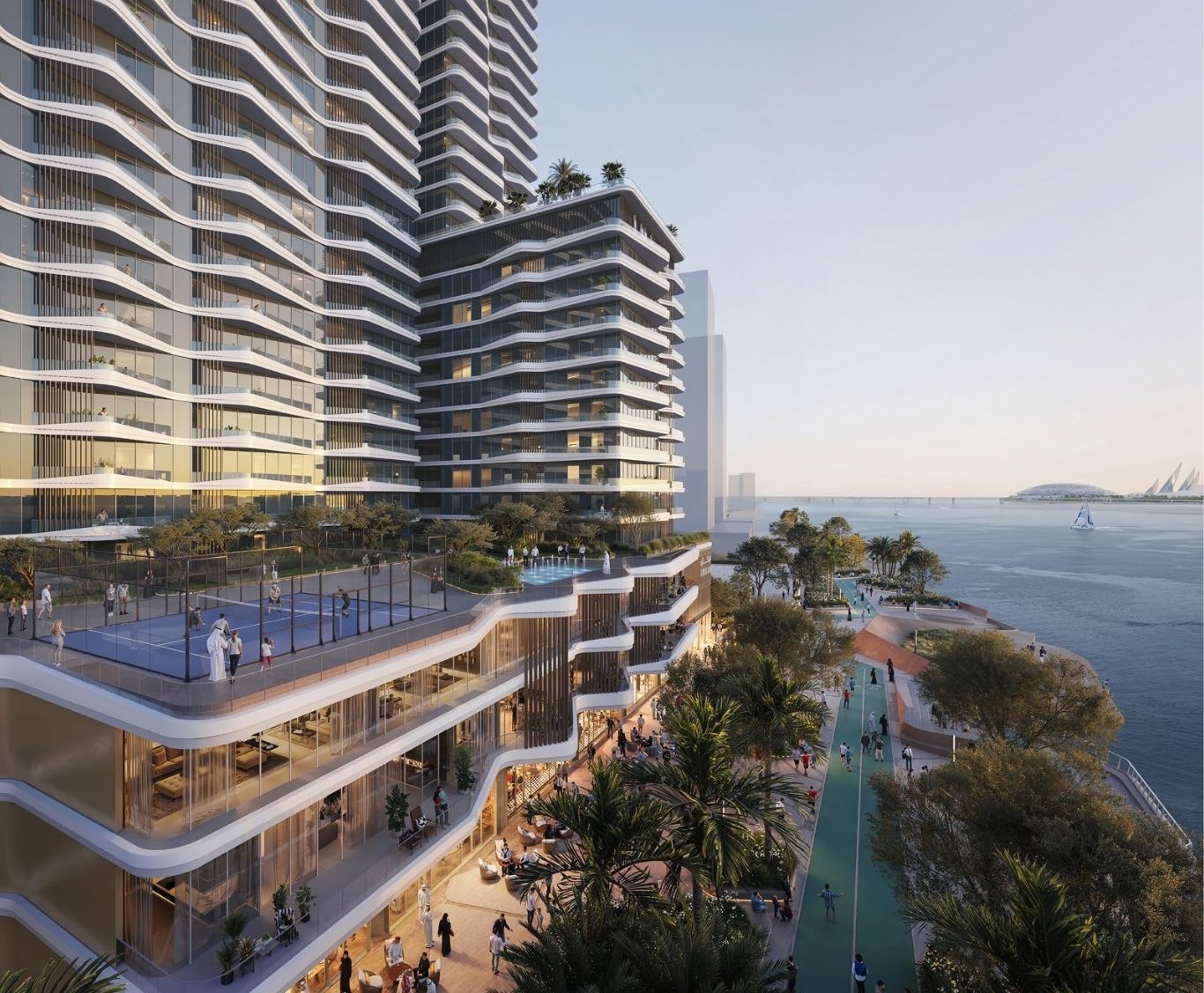
Global capital has a well-worn pattern: it flows toward stability, then prices follow. Monaco, Singapore, and London are living proof, decades of wealth inflow have pushed their waterfront property into a league of its own. Abu Dhabi is now attracting that same caliber of capital. Its pricing simply hasn't caught up yet.
That gap is the opportunity.
Prime beachfront living in Monaco commands roughly $5,800per square foot. In London, it's closer to $2,800. In Abu Dhabi, across destinations like Saadiyat Island, Yas Island, Reem Island, and Hudayriyat Island, comparable waterfront property is currently available for as little as $350 to $820 per square foot.
This isn't a case of lower demand justifying lower prices. It's closer to the opposite: demand fundamentals are accelerating faster than valuations have adjusted to reflect them.
Abu Dhabi didn't get this attention by accident. In 2025,the UAE recorded the highest net inflow of millionaires of any countryworldwide, a clear signal of where global wealth is choosing to relocate andbuild long-term roots. Abu Dhabi's financial sector reflected that momentumdirectly, with the Abu Dhabi Global Market expanding 43% within a single year,and an increasing number of international family offices establishing theirbase in the emirate.
Historically, this exact pattern, sustained high-net-worthmigration combined with institutional capital deepening its footprint haspreceded major repricing cycles in every comparable global market. Monaco sawit. Singapore saw it. London saw it. Abu Dhabi is only in the early innings ofthe same story.
Q1 2026 delivered AED 66 billion in real estate transactions across Abu Dhabi, over 100% jump year-on-year, with activity concentrated heavily on the waterfront islands of Hudayriyat, Saadiyat, Reem, and Yas.
Even with roughly 30% price appreciation already behind it, Abu Dhabi's prime waterfront segment remains at the lower end of the global luxury real estate spectrum when benchmarked against comparable international wealth hubs.
What sets this window apart isn't just the appreciation potential, it's that investors are compensated while they wait for it. Abu Dhabi waterfront properties are currently generating gross yields of 5% to 8%,compared to just 2% to 3% in Monaco and London.
Finding a market that offers both meaningful upside andstrong current income, at this scale, is rare. Right now, that combinationexists in Abu Dhabi in a way it doesn't in most comparable global cities.
The momentum isn't limited to price and yield data. It'ssupported by:
These are the structural conditions that tend to supportsustained, long-term capital appreciation rather than short-lived spikes.
The real debate isn't whether Abu Dhabi's real estate market will continue to grow, the data already points in one direction. The more relevant question for investors is timing: entering while the market is still under valued relative to its global peers, or waiting until that gap has closed.
Markets that offer this kind of asymmetry rarely stay this way for long. The investors who benefit most are typically the ones who understood the opportunity before it became consensus.
If you're exploring how to build long-term wealth throughreal estate, now is the right time to understand this market and evaluate theopportunities within it.
Have questions about how this shift could apply to your own investment plans? I'm always glad to discuss the market in more depth and help you think through what fits your goals.
Reach out anytime for a one-on-one conversation.